I have been in the software development industry for almost 15 years now and I can safely say that, at least for me, game development has been the most fun and stimulating kind of work. It constantly throws new challenges at you and solving them can be both painful and deeply rewarding. The excitement when things finally come together is unmatched.
That said, many people tend to think game dev is all about gameplay programming, with flashy mechanics, combat systems, cards, and visual effects. But over time I have learned that is not really the full picture, and Gotogra reminded me of that again and again.
Building Tools: The Dungeon Editor
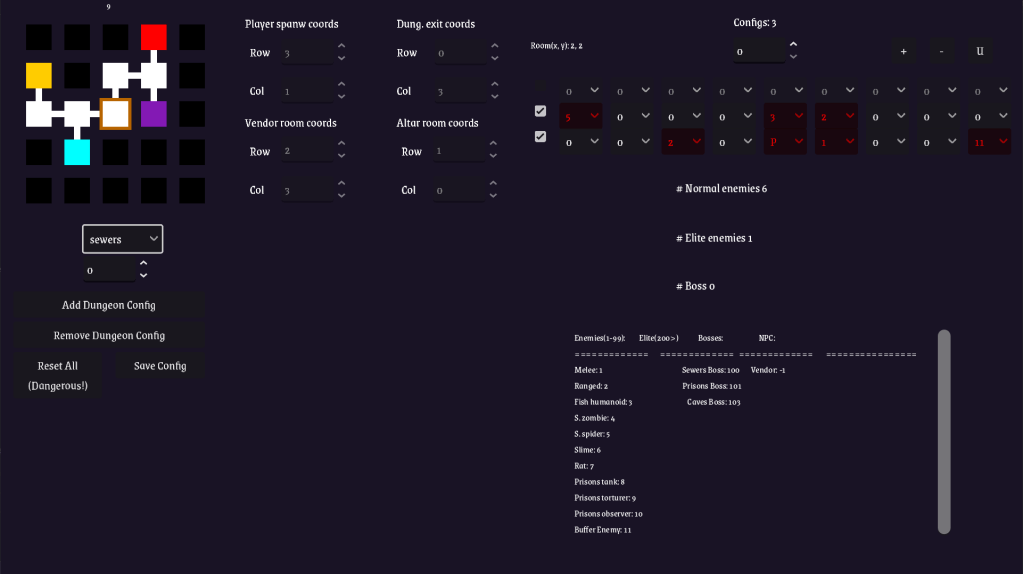
One of the biggest time investments early on was a custom tool for editing and generating dungeons. Gotogra uses a randomized approach for dungeon generation, but it is based on a manually designed pool of encounters. This lets me control how rooms appear while keeping every run unpredictable but fair.
To make that work, I had to create a special in-house editor. It is nothing too fancy, but it took about a month of full-time work to reach a functional version. I still maintain and tweak it regularly. It is not gameplay, but it is one of those tools that quietly saves me a huge amount of time and helps the game stay consistent.
The Save System: A Month of Invisible Work
Another feature that does not look exciting but is absolutely necessary is the save system. This one also took around a month of dedicated development. It allows players to quit the game at any time during a run and return exactly where they left off with cards, dungeons, enemies, and everything else preserved.
Under the hood, the solution is simple. I serialize the game state to disk and then rehydrate all objects on load. It is the kind of system that nobody notices when it works, and that is exactly how it should be.
Closing Thoughts
Both of these systems, the dungeon configuration tool and the save system, are not the most exciting things to show in a devlog, but they are crucial. They represent the less visible side of game development, the infrastructure that makes the fun stuff possible.
And honestly, I still find them fun in their own way. They are little engineering puzzles that make Gotogra more stable, flexible, and enjoyable for everyone.
The next updates will focus more on gameplay features, which are definitely easier and more exciting to show publicly. But I thought it was worth sharing this small behind-the-scenes look at what has been going on lately.
Thanks for reading, and as always, thank you for following Gotogra’s journey.
 gotogra.com
Leave a comment